Resources · ACT in everyday life
Change: When everything is open and nothing feels certain
Why transitions – a new job, a new city, a separation, a fresh start – stir up so much unease, what your mind does with it, and how to stay able to act in uncertain phases.
6 min read
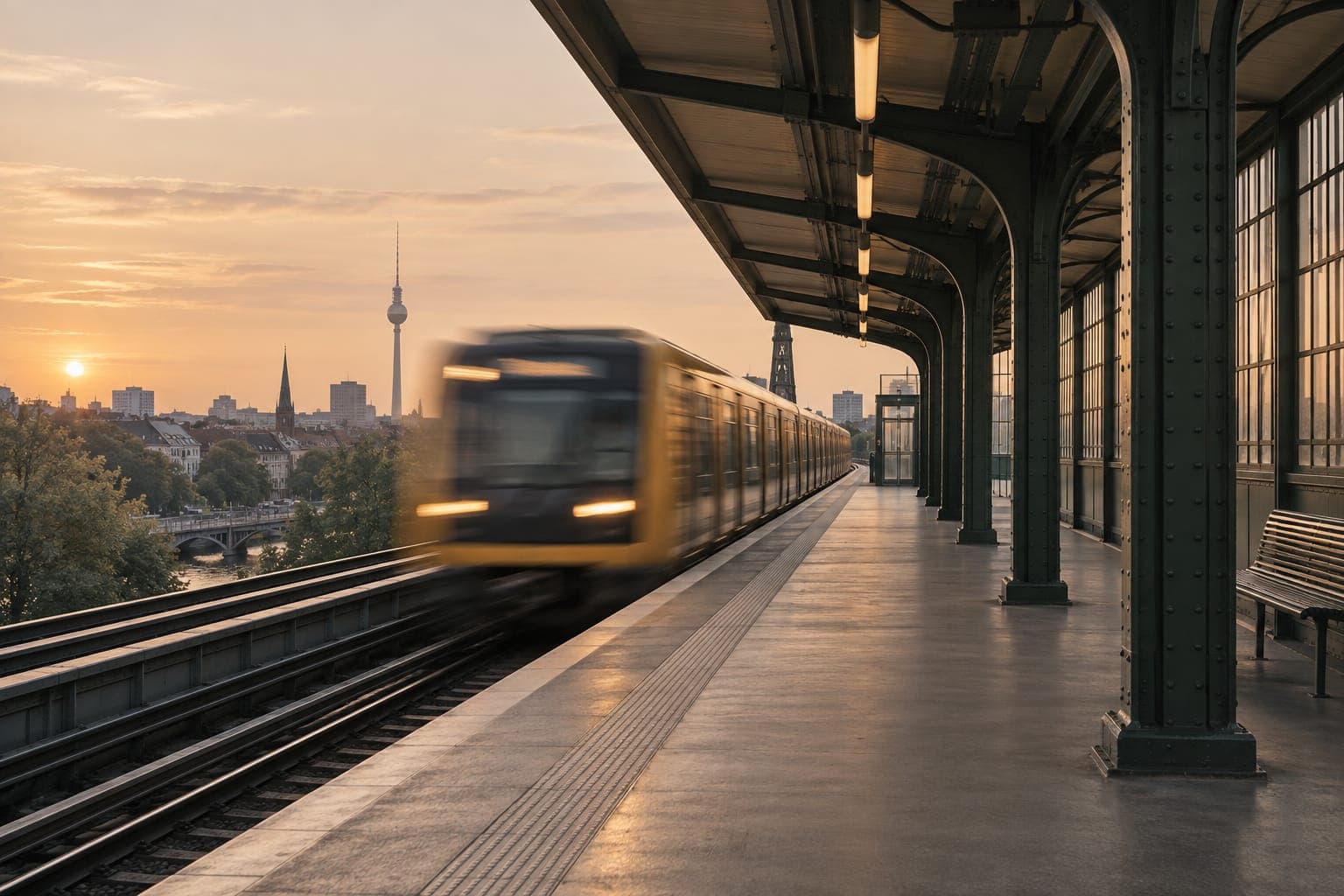
The second Monday
The first week in the new job was exciting. Everything new, everyone friendly, lots of input. Now it's the second Monday, and the excitement has gone. What's left is the feeling of not being able to do anything properly. The processes everyone else handles in their sleep. The names you still can't place. The question of whether the decision was right. In the bathroom in the morning you think about the old office and how easily everything went there. You know it takes time. But knowing doesn't help right now.
Transitions come in many forms: the new city where you don't know anyone yet. The separation, after which the flat is suddenly silent. The end of your studies, when the structure falls away. The moment the children have left home. Even changes you wanted have this phase in which the old no longer holds and the new doesn't yet.
What's happening here, seen through ACT
Our mind likes predictability. It's built to form patterns from experience and to derive the future from them. In familiar situations that runs in the background and provides security – you don't have to work out how to get to work or how the team will react to a suggestion. In a transition, those patterns are missing. The mind has no prediction, and it registers that as danger. The result is unease, even when nothing is objectively threatening.
The mind then tries to fix that unease the way it fixes everything: by thinking. It compares the new with the old, looks for proof that the decision was right or wrong, runs through scenarios. That feels like getting your bearings. In fact it keeps you in a position where you're observing instead of arriving. Arriving doesn't come from thinking but from doing – from the many small actions that slowly turn into patterns again.
A second mechanism: the mind likes to compare the present with a smoothed-over version of the past. The old office wasn't as easy as it feels from here – but the strains of that time have vanished from memory while the familiar ease has stayed. That comparison is unfair and still convincing. It makes the new look worse than it is.
And finally: in uncertain phases it's tempting to go into a holding pattern. Settle in first, then meet people. Process the separation first, then do things again. Feel safe first, then act. That sounds sensible but gets the order backwards. The feeling of safety comes after acting, not before. If you wait until it feels safe, you often wait a long time.
It's worth distinguishing between two kinds of unease here. One belongs to the transition and quietens down by itself as the new becomes familiar. The other is a sign that something about the new situation genuinely doesn't fit you – the job, the pace, the city. From the inside they feel the same. Usually they can only be told apart by acting for a while instead of observing: someone who has engaged and still notices it isn't right knows something. Someone judging from the holding pattern is guessing.
Two exercises for everyday life
1. Fixed points in the day
When a lot is in flux outside, a few things that stay the same help – not because they're especially important, but because they give the mind a piece of predictability back. Choose two or three small actions you do at the same time every day, regardless of how the day goes: coffee by the window, a walk around the block after work, ten minutes of reading before sleep. Nothing ambitious. Things you can manage on bad days too.
The point isn't self-optimisation. The point is that there are moments in the day when the mind knows what's coming. That lowers the baseline unease – and makes it easier to face the rest.
2. The next small step towards arriving
Ask yourself: what would someone do who has arrived here? Not in five years – now, this week. Perhaps: ask a colleague to join you for lunch. Find the shop you'll do your shopping in from now on. Try out a club or a class; hang a picture in the post-separation flat. Something small you can do without feeling safe first.
Then do it, with the uncertainty in tow. Notice what your mind says about it – "That won't help", "It's too early for that" – and do it anyway. These actions are the building blocks the mind later turns into new patterns. Arriving isn't a feeling that turns up one day. It's the sum of steps like these.
When counselling makes sense – and when psychotherapy is the better path
Counselling fits transition phases well: when you're living through a change and notice that the unease is paralysing you, that you're stuck in a holding pattern, or that old patterns – withdrawal, overthinking, self-doubt – are getting especially loud right now. Together we look at what matters to you in this new phase, which steps in that direction are possible, and how you can relate to the uncertainty instead of waiting for it to disappear.
Psychotherapy is the better path if the change is tied to a serious loss that overwhelms you, if a persistent low mood sets in over weeks, if sleep and concentration suffer markedly, or if anxiety becomes so strong that it governs your day. Psychological counselling is not medical treatment and doesn't replace it. If I get the impression that you'd be better supported elsewhere, I'll tell you openly.